💡 Quick Answer
Choose WHOOP if you train most days and want a device that tells you how hard to push, using its Strain and Recovery scores. Choose Oura if your priority is sleep, a clean overnight HRV trend and a discreet ring with lower ongoing cost. For longevity, both now offer aging metrics; neither is a shortcut.
- Athletes: WHOOP, because its strain-recovery model is built around training load.
- HRV tracking: Oura gives the simplest nightly HRV trend; WHOOP folds sleep HRV into a training-focused Recovery score.
- Longevity: WHOOP Healthspan (WHOOP Age) is the more focused longevity feature; Oura offers Cardiovascular Age.
- Neither app exports HRV to Apple Health, so plan to keep your HRV history in the brand's own app.
WHOOP and the Oura Ring are the two wearables people most often weigh up for recovery, sleep and HRV. Both are worn around the clock, both measure heart rate variability during sleep, and both charge an ongoing membership. They are built on different philosophies, though: WHOOP is a training tool that also tracks health, and Oura is a sleep and health tool that also tracks activity. Below is a straight verdict for each of the questions people actually ask, followed by a head-to-head table.
The Verdict: WHOOP or Oura?
For athletes: WHOOP
If you train most days, WHOOP gives you more to act on. Every session and every day gets a Strain score from 0 to 21, and each morning's Recovery score (0 to 100%, colour-coded green, yellow or red) is built from overnight HRV, resting heart rate, respiratory rate and sleep. The app then suggests how much strain to take on and how much sleep you need tonight based on what you did yesterday. Oura tracks workouts and activity, but it has no training load model to match.
For HRV tracking: Oura, by a small margin
Oura measures HRV overnight from the finger, where arteries sit close to the skin and the hand is still during sleep. It shows your nightly average and your trend clearly, which is what most people tracking HRV want. WHOOP also uses sleep-time HRV for Recovery, and tracks heart rate continuously through the day, but it presents HRV mainly as an input to Recovery. Both are good enough to follow your own trend over weeks; neither replaces a chest strap for precise readings, and the two brands' numbers should not be compared directly.
For longevity: it depends on your weak spot
A wearable does not extend your life; changing sleep, fitness and training habits might. WHOOP's Healthspan feature turns that into a single number, WHOOP Age, plus a Pace of Aging trend, built from sleep consistency, sleep time, time in heart rate zones, strength training, steps, VO2 max, resting heart rate and lean body mass. Oura offers Cardiovascular Age and Cardio Capacity, and its sleep coaching is excellent. If you want one longevity score to steer habits, pick WHOOP; if poor sleep is what is holding you back, pick Oura.
WHOOP vs Oura: Head-to-Head Comparison
| Feature | WHOOP 5.0 / MG | Oura Ring 5 / Ring 4 |
|---|---|---|
| Form factor | Screenless strap worn on wrist, bicep or in compatible apparel | Smart ring worn on a finger |
| Current models | WHOOP 5.0 and WHOOP MG (launched May 2025) | Oura Ring 5 (launched June 2026) and Oura Ring 4 |
| Pricing model | Annual membership that includes the device; three tiers (One, Peak, Life), with Life including WHOOP MG. Roughly $199 to $359 per year at the time of writing | Buy the ring up front (Ring 5 from $399; Ring 4 from about $349) plus Oura Membership ($5.99/month or $69.99/year) |
| HRV measurement | Heart rate tracked 24/7; the HRV that drives Recovery is measured during sleep | Measured overnight during sleep; nightly average and trend shown in the app |
| Strain / training load | Core feature: day and workout Strain score (0 to 21) balanced against Recovery | No strain model; activity score, workout tracking and activity balance in Readiness |
| Sleep staging | Light, deep and REM, plus a personalised sleep need based on strain and sleep debt | Light, deep and REM; sleep is the core of the product and of the Readiness score |
| Temperature | Skin temperature trend | Finger temperature deviation, used for readiness, illness signals and cycle insights |
| Battery | 14+ days (WHOOP 5.0 / MG); charge with the battery pack while wearing it | About a week (Ring 5, with an optional charging case); up to 8 days (Ring 4) |
| Export to Apple Health / Health Connect | Sleep, resting heart rate, respiratory rate, SpO2 and workouts. Does not export HRV | Sleep stages, heart rate, respiratory rate, steps, active energy and workouts. Does not export HRV, Readiness or temperature |
| Longevity features | Healthspan: WHOOP Age and Pace of Aging | Cardiovascular Age and Cardio Capacity |
| Best for | Athletes who train most days and want daily training guidance | Sleep, general health and people who want a discreet device |
Prices change often and vary by country, so check both brands' sites before buying.
Form Factor and Wearing Experience
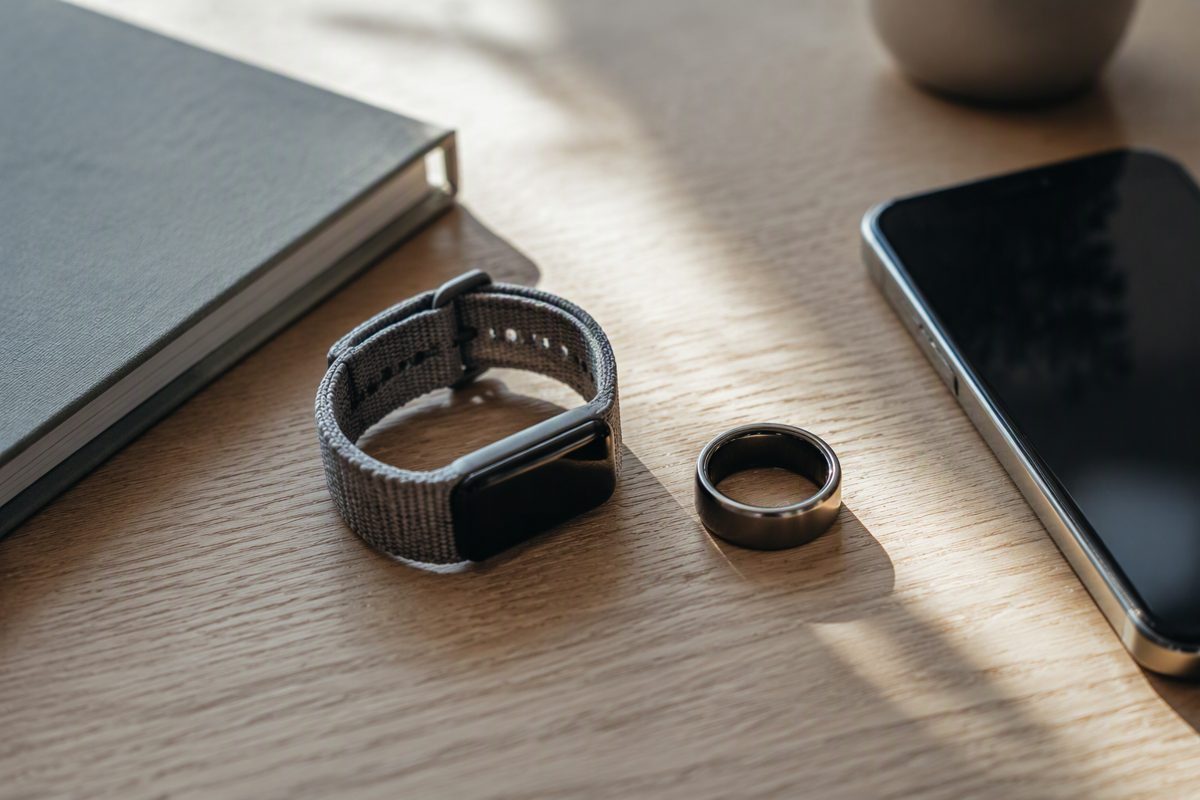
WHOOP is a screenless strap worn on the wrist or bicep, or in compatible apparel. There are no notifications and no display; it exists purely to collect data. WHOOP 5.0 and WHOOP MG launched in May 2025 with a smaller sensor, a battery life of 14+ days and a battery pack that slides on so you can charge while wearing it. WHOOP MG adds medical-grade features such as ECG, available on the Life membership.
Oura's rings (the Ring 5, launched June 2026 and about 40% smaller, and the Ring 4) are worn on the finger and look like jewellery. They are easy to wear to bed, unobtrusive at work and in social settings, and last about a week per charge. The trade-off is during lifting: a ring can be uncomfortable under a barbell or kettlebell handle, and many lifters take it off for the session. WHOOP on the bicep or non-dominant wrist is more practical in the gym.
Recovery Scoring: Two Different Philosophies
WHOOP Strain and Recovery
WHOOP's core idea is the balance between strain and recovery. Strain (0 to 21) reflects the cardiovascular load of all activity, and Recovery (0 to 100%) is derived mainly from overnight HRV, resting heart rate, respiratory rate and sleep performance. The output is prescriptive: it tells you whether today is a day to push, train moderately or rest. Coaches like that it shows load building up over time, which can flag athletes trending toward overreaching.
Oura Readiness Score
Oura's Readiness Score (0 to 100) weights sleep and its timing heavily, with HRV balance, resting heart rate, body temperature deviation and activity balance as contributors. It does not quantify how hard your training was. What it does well is show the recovery cost of everything else: alcohol, illness, travel, late meals and stress all show up clearly in Oura's temperature and sleep data.
Sleep Tracking
Both devices stage sleep into light, deep and REM, and both have been tested against polysomnography in published research (see references below). Consumer wearables are reasonably good at telling sleep from wake and less precise at separating individual stages, so treat stage minutes as estimates and focus on trends. Oura makes sleep the centrepiece of its app and readiness score. WHOOP's standout sleep feature is its personalised sleep need, which raises tonight's target after a hard training day or a run of short nights.
Price and Value
WHOOP has no separate device price: you pay an annual membership and the hardware is included. There are three tiers, One, Peak and Life, with Life including the WHOOP MG hardware and its medical-grade features. Oura charges for the ring up front, then $5.99 a month or $69.99 a year for the membership. Over several years Oura usually works out cheaper, especially compared with WHOOP's higher tiers. That gap is worth paying if WHOOP's training guidance is central to how you train, and harder to justify if you mainly want sleep data.
Choose WHOOP if:
You train most days and want your data to actively shape training decisions. You compete in endurance, strength or team sports and want to track cumulative load. You coach a team and want shared readiness data. You want a single longevity score to work on.
Choose Oura Ring if:
Sleep is your main goal. You want a device that blends into daily life. You want temperature-based cycle insights and early signs that you may be getting ill. Your goals are broader than athletic performance, and you prefer a lower ongoing cost.
Related Resources
- Understand the metric both devices measure: HRV Monitoring Guide
- Broader wearable landscape overview: Smart Wearables for Fitness 2026
- Improve the sleep data both devices measure: Sleep Science for Athletes
Frequently Asked Questions
What is better for increasing longevity: WHOOP or Oura?
Neither device increases longevity by itself; it only helps you track the habits that matter, such as sleep, cardio fitness and training. WHOOP has a dedicated Healthspan feature with WHOOP Age and Pace of Aging, built from sleep, heart rate zones, strength training, steps, VO2 max and resting heart rate. Oura offers Cardiovascular Age and Cardio Capacity alongside its sleep and readiness data. If you want one longevity score to steer your habits, WHOOP is more focused; if sleep is your weak spot, Oura is the better daily nudge.
Which provides better insights for athletes: WHOOP or Oura?
WHOOP. Its Strain score quantifies the cardiovascular load of every session and the whole day, and Recovery tells you how ready you are to take on more. That strain-recovery loop, plus a personalised sleep need based on yesterday's load, is built for people who train most days. Oura's activity and readiness data are useful but it has no equivalent training load model.
What's the best wearable for HRV tracking: Oura or WHOOP?
For a clean nightly HRV trend, Oura is the simpler choice: it measures HRV overnight from the finger, where sleep-time signal is good, and shows the night's average and trend clearly. WHOOP tracks heart rate around the clock but bases its Recovery HRV on sleep too, and wraps it into a training-focused Recovery score. Both are reliable enough for tracking your own trend; neither should be compared number-for-number with the other or with a chest strap.
Can I see my WHOOP or Oura HRV in Apple Health?
Not fully. Oura writes sleep stages, heart rate, respiratory rate, steps, active energy and workouts to Apple Health, but not HRV, Readiness or temperature. WHOOP exports sleep, resting heart rate, respiratory rate, SpO2 and workouts, and does not export HRV. To work with HRV history you need each brand's own app or data export.
Do WHOOP and Oura work without a subscription?
WHOOP is sold as a membership that includes the hardware, so it does not work without an active plan. Oura sells the ring up front and the full app experience, including Readiness and detailed sleep analysis, requires the Oura Membership. In practice, budget for ongoing fees with both.
Can I use WHOOP and Oura at the same time?
Yes. One sits on the wrist or arm and the other on a finger, so they do not interfere. Some athletes pair WHOOP for training load with Oura for sleep, but you pay two subscriptions and will see two different recovery numbers, so decide in advance which one drives your training decisions.
Scientific References
- Altini M, Kinnunen H. The Promise of Sleep: A Multi-Sensor Approach for Accurate Sleep Stage Detection Using the Oura Ring. Sensors, 2021;21(13):4302. DOI: 10.3390/s21134302
- Miller DJ, et al. A Validation Study of a Commercial Wearable Device to Automatically Detect and Estimate Sleep. Biosensors, 2021;11(6):185. DOI: 10.3390/bios11060185
- Peake JM, et al. A Critical Review of Consumer Wearables, Mobile Applications, and Equipment for Providing Biofeedback, Monitoring Stress, and Sleep in Physically Active Populations. Frontiers in Physiology, 2018. DOI: 10.3389/fphys.2018.00743
UltraFit360 brings your workouts, nutrition and wearable data together. See how the AI fitness tracker works with Apple Health and Health Connect.