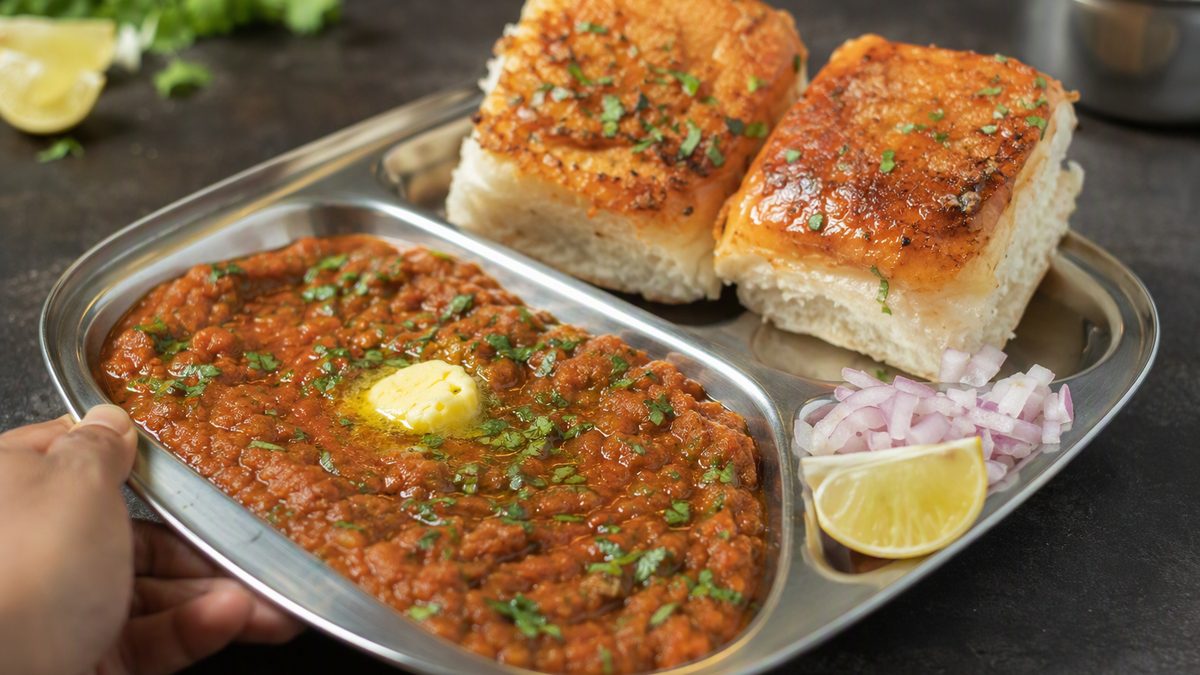
💡 Quick Answer
A home plate of pav bhaji (about 250 g of bhaji and 2 pav toasted with 1 tsp butter each) has roughly 560 kcal, 12 g protein, 75 g carbs and 24 g fat. One katori (150 g) of home bhaji is about 165 kcal, one plain pav about 106 kcal and one butter-toasted pav about 142 kcal. A street or restaurant butter pav bhaji plate is usually 700–900 kcal.
- Butter, not the vegetables, decides how heavy the plate is.
- Each teaspoon of butter adds about 36 kcal; the dollop on top is often 2 teaspoons.
- The two pav supply about half the calories of a home plate.
- Pav bhaji is low in protein: about 12 g for a full plate.
Portion calculator
1 katori of home bhaji ≈ 3.4 g protein · 165 kcal
Scaled from the figures on this page. Brands and recipes vary.
Counting calories? Snap a photo of your pav bhaji plate and the UltraFit360 app logs the bhaji, the pav and the butter against your daily target. Get UltraFit360 on the App Store or Google Play.
Pav bhaji is mostly vegetables, which makes it look lighter than it is. The bhaji is mashed potato, peas, cauliflower, capsicum, onion and tomato, and on its own that is a fairly modest dish. What turns it into a 700+ kcal meal at a Juhu or Girgaon stall is butter: in the bhaji, on the tawa for the pav and as a final dollop on top. Here is how each part adds up, so you can log a plate without guessing.
How These Numbers Were Calculated
Pav bhaji has no single official nutrition value, so every figure here is calculated from a stated home recipe. Base values per 100 g come from USDA FoodData Central: boiled potato 87 kcal and 1.9 g protein, raw green peas 81 kcal and 5.4 g, cauliflower 25 kcal and 1.9 g, green capsicum 20 kcal and 0.9 g, onion 40 kcal and 1.1 g, tomato 18 kcal and 0.9 g, salted butter 717 kcal, vegetable oil 884 kcal, and white bread 266 kcal and 7.6 g protein (used for pav). One teaspoon of butter or oil is taken as 5 g.
The reference serving of bhaji uses 100 g boiled potato, 30 g peas, 30 g cauliflower, 30 g capsicum, 40 g onion and 80 g tomato, cooked with 10 g butter (2 tsp) and 5 g oil (1 tsp). With water added and cooked down, that gives about 250 g of bhaji, or a little under 2 katoris. One pav is taken as 40 g, the same as in our samosa pav numbers. Pav bhaji masala, salt and lemon add only a few calories and are ignored.
Calories in Pav Bhaji: Bhaji, Pav and a Full Plate
| Item | Serving | Calories | Protein | Carbs | Fat |
|---|---|---|---|---|---|
| Bhaji, home | 1 katori (150 g) | ~165 kcal | ~3.4 g | ~20 g | ~8 g |
| Bhaji, home | per 100 g | ~108 kcal | ~2.2 g | ~14 g | ~5.4 g |
| Bhaji, home | full serving (250 g) | ~270 kcal | ~5.6 g | ~34 g | ~13.5 g |
| Pav, plain | 1 pav (40 g) | ~106 kcal | ~3.0 g | ~20 g | ~1.3 g |
| Pav, toasted with 1 tsp butter | 1 pav | ~142 kcal | ~3.0 g | ~20 g | ~5.4 g |
| Home plate (250 g bhaji + 2 butter pav + onion) | 1 plate | ~560 kcal | ~12 g | ~75 g | ~24 g |
| Home plate with 3 butter pav | 1 plate | ~700 kcal | ~15 g | ~95 g | ~30 g |
| Street or restaurant butter pav bhaji | 1 plate | ~700–900 kcal | ~12–15 g | ~80–95 g | ~40–55 g |
Basis: USDA FoodData Central ingredient values and the recipe above; chopped onion on the side counted at about 8 kcal for 20 g. Street and restaurant values are estimates, not calculations. Cooked weight depends on how much water you add and how long the bhaji cooks down, so per-katori values shift a little from kitchen to kitchen.
If you only remember one number: a home plate of pav bhaji is about 560 kcal. The bhaji is roughly 270 kcal of that and the two butter pav about 285 kcal.
Where the Calories Come From
In the home recipe, the vegetables in a full serving of bhaji add up to only about 155 kcal. The 2 teaspoons of butter and 1 teaspoon of oil add another 116 kcal. Then the pav adds about 212 kcal for two plain pav, plus 72 kcal for the butter used to toast them. In other words, close to 40% of the plate's calories are fat from butter and oil, and the vegetables are the smallest part.
That explains why the same plate can be 450 kcal at home and almost twice that at a stall. The vegetables do not change much; the butter does.
Street and Restaurant Pav Bhaji
Stalls cook bhaji in large quantities on a big tawa with a block of butter, toast each pav in butter and finish the plate with a generous cube on top. The portion of bhaji is also usually larger, around 300 g. As a rough estimate, a typical street plate breaks down like this:
- Bhaji (about 300 g): about 185 kcal from vegetables plus 25–30 g of butter (180–215 kcal).
- 2 pav toasted in butter: about 212 kcal of bread plus 10–15 g of butter (70–110 kcal).
- Butter on top: about 10 g, or 72 kcal.
That lands at roughly 700–900 kcal for one plate, with "Amul butter extra" orders going higher. Cheese pav bhaji adds about 60–70 kcal per 20 g slice or handful of grated processed cheese. Jain pav bhaji, made with raw banana instead of potato, has similar calories because the butter stays the same.
Calories by Number of Pav
Most people eat the bhaji with 2 pav and then order an extra one. Every extra butter-toasted pav adds about 142 kcal, and every extra plain pav about 106 kcal.
| Plate | Home (250 g bhaji) | Street (estimate) |
|---|---|---|
| Bhaji + 1 butter pav | ~420 kcal | ~550–700 kcal |
| Bhaji + 2 butter pav | ~560 kcal | ~700–900 kcal |
| Bhaji + 3 butter pav | ~700 kcal | ~850–1,050 kcal |
| Bhaji + 4 butter pav | ~845 kcal | ~1,000–1,200 kcal |
A Lighter Pav Bhaji at Home
You do not need to give up pav bhaji to lose fat. Three small changes take a home plate from about 560 kcal to about 410 kcal:
- Cook the bhaji with 1 teaspoon of butter only (about 191 kcal for the full 250 g serving instead of 270). Pav bhaji masala, lemon and coriander carry most of the flavour.
- Toast the pav dry on a hot tawa instead of in butter: 106 kcal each instead of 142.
- Shift the ratio toward vegetables. Add more cauliflower, capsicum, peas and tomato and less potato. The plate gets bigger for the same calories.
Another easy move is to eat the bhaji with one pav instead of two and add a katori of curd or a side of salad.
How It Fits Your Goal
Fat loss: pav bhaji is a meal, not a snack. Count a home plate at about 560 kcal and a street plate at 700–900. Order "less butter" at stalls, skip the extra cube on top, and stop at two pav. A lighter home version (about 410 kcal) fits most fat-loss days easily.
Muscle gain: the problem is protein, not calories. A full plate gives only about 12 g. Stir 50 g of grated paneer into your serving of bhaji (about 150 kcal and 9.5 g protein extra; see protein in paneer) or have a glass of milk or a bowl of curd alongside. Compare pav bhaji with vada pav, samosa and biryani in the Indian food calories and protein chart, and set your daily target with the calorie calculator.
How to Make Pav Bhaji Higher in Protein
| Plate | Calories | Protein |
|---|---|---|
| Home plate (250 g bhaji + 2 butter pav) | ~560 kcal | ~12 g |
| Home plate + 50 g paneer in the bhaji | ~710 kcal | ~21 g |
| Lighter plate (1 tsp butter, dry-toasted pav) + 50 g paneer | ~565 kcal | ~21 g |
| Home plate + 1 katori curd (150 g) | ~650 kcal | ~17 g |
Paneer counted at 305 kcal and 18.9 g protein per 100 g (IFCT 2017 protein, typical full-fat packaged paneer energy); curd at about 90 kcal and 5 g protein per 150 g, as in our paratha guide.
Frequently Asked Questions
How many calories are in 1 plate of pav bhaji?
A home plate with about 250 g of bhaji and 2 pav toasted with a teaspoon of butter each has roughly 560 kcal and 12 g protein. A street or restaurant butter pav bhaji plate is usually 700 to 900 kcal.
How many calories are in 1 katori of bhaji?
About 165 kcal for a 150 g katori of home bhaji cooked with 2 teaspoons of butter and 1 teaspoon of oil per 250 g serving, with about 3.4 g protein. Street bhaji with more butter is higher.
How many calories are in 1 pav?
A plain 40 g pav has about 106 kcal and 3 g protein. Toasted with a teaspoon of butter it is about 142 kcal.
Is pav bhaji good for weight loss?
It can fit if you treat it as a full meal. Cook with 1 teaspoon of butter, toast the pav dry and stop at two pav, which brings a home plate to about 410 kcal. Street versions are much higher because of butter.
How much protein is in pav bhaji?
A home plate has about 12 g of protein, which is low for a 560 kcal meal. Adding 50 g of grated paneer to the bhaji raises it to about 21 g.
Is pav bhaji healthier than vada pav?
Per plate, pav bhaji has more calories because it includes two pav and a large serving of bhaji, about 560 kcal at home against about 325 kcal for one vada pav. It also has more vegetables and is not deep-fried.
Sources: USDA FoodData Central for potato, peas, cauliflower, capsicum, onion, tomato, butter, vegetable oil and white bread; IFCT 2017 (ICMR-NIN) for paneer protein. All pav bhaji values are calculated from the stated home recipe and are estimates; street and restaurant ranges are estimates only.
Log Indian meals in seconds: snap a photo of your thali and UltraFit360 estimates calories and protein. Set your targets with the free calorie and macro calculator.
Log Your Pav Bhaji Plate in One Photo
UltraFit360 estimates calories and protein for Indian street food and keeps your daily targets on track.