💡 Quick Answer
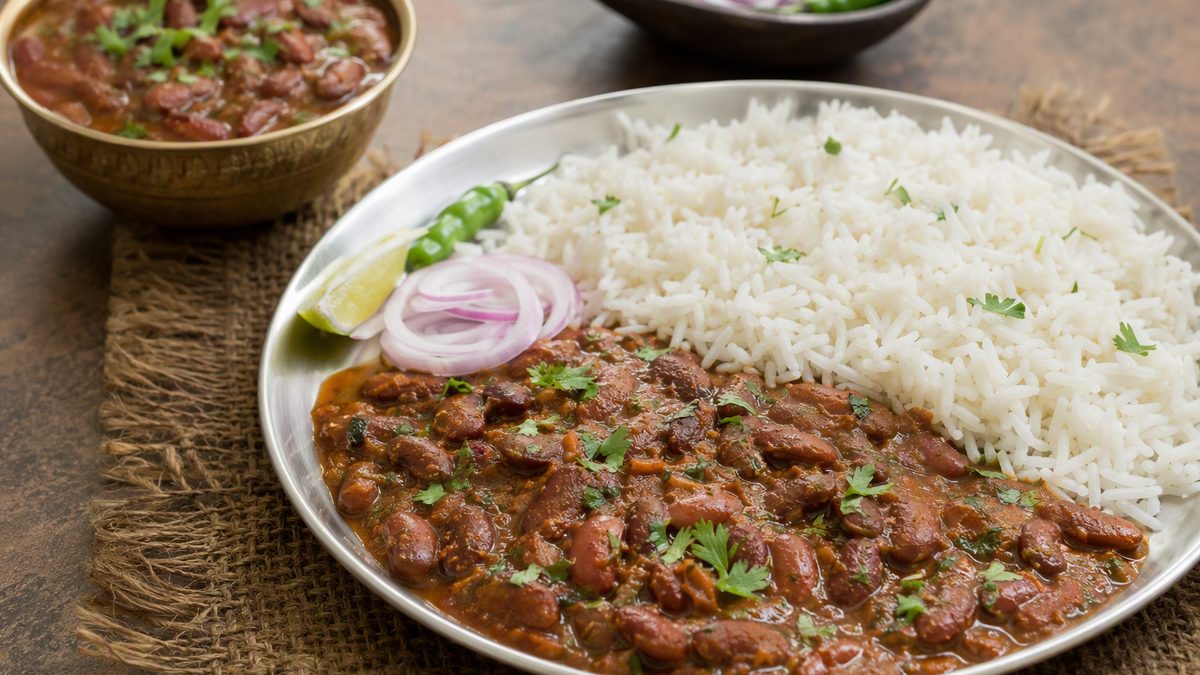
One 150 g katori of home rajma curry (about 80 g boiled beans plus gravy and 1 tsp oil) has roughly 155 kcal, 7 g protein and 20 g carbs. A standard rajma chawal plate with one katori each of rajma and rice is about 350 kcal and 11 g protein. Plain boiled rajma is 127 kcal per 100 g, and a restaurant katori is usually 200–280 kcal.
- Rajma curry is about half beans and half gravy, which keeps calories moderate.
- Oil, butter and cream decide restaurant rajma calories, not the beans.
- Rice usually supplies more calories on the plate than the rajma does.
- Two katoris of rajma with one of rice beats the reverse for protein and fullness.
Portion calculator
1 katori of rajma curry, home ≈ 7 g protein · 155 kcal
Scaled from the figures on this page. Brands and recipes vary.
Counting calories? Snap a photo of your rajma chawal and the UltraFit360 app logs the rajma, rice and ghee against your daily target. Get UltraFit360 on the App Store or Google Play.
Rajma chawal is comfort food across North India, and it is a better meal than its heavy reputation suggests. The beans are filling and high in fibre, and a home katori of rajma curry is moderate in calories. What changes the number is how much of the katori is beans versus gravy, how much oil or butter goes in, and the size of the rice heap next to it. Here is how to log each version.
Calories in Rajma Per 100 g: Dry vs Boiled
Rajma more than doubles in weight as it soaks and cooks, so calories per gram drop sharply once it is boiled. Values are USDA FoodData Central figures for red kidney beans, matching our protein in rajma guide.
| Rajma (red kidney beans) | Calories | Protein | Carbs | Fibre | Fat |
|---|---|---|---|---|---|
| Dry / raw, per 100 g | 333 kcal | 23.6 g | 60 g | 24.9 g | <1 g |
| Boiled, no gravy, per 100 g | 127 kcal | 8.7 g | 22.8 g | 6.4 g | ~0.5 g |
| Boiled, 1 katori (150 g) | ~190 kcal | ~13 g | ~34 g | ~9.6 g | ~0.8 g |
| Dry, one serving (50 g before soaking) | ~165 kcal | ~12 g | ~30 g | ~12 g | <0.5 g |
Basis: USDA FoodData Central, kidney beans, mature seeds, raw and boiled without salt. As a rule of thumb, 100 g of dry rajma becomes about 250 g of boiled beans.
Calories in 1 Katori of Rajma Curry
A katori of rajma curry is a mix of beans and gravy, and the ratio decides the number. Here are the common versions, each a 150 g katori, with the recipe stated:
| Rajma (1 katori, 150 g) | Recipe | Calories | Protein | Carbs | Fat |
|---|---|---|---|---|---|
| Home rajma curry | 80 g boiled beans, 1 tsp oil, 20 g onion, tomato and spices in gravy | ~155 kcal | ~7 g | ~20 g | ~5.5 g |
| Thick home rajma (mostly beans) | 100 g boiled beans, 1½ tsp oil, onion and tomato | ~205 kcal | ~9 g | ~25 g | ~8 g |
| Home rajma with ghee tadka on top | Home curry + 1 tsp ghee | ~200 kcal | ~7 g | ~20 g | ~10.5 g |
| Restaurant / dhaba rajma | More oil, butter, sometimes cream | ~200–280 kcal | ~7–9 g | ~20–25 g | ~10–18 g |
| Rajma masala, restaurant (rich) | Butter and cream finish | ~280–330 kcal | ~8–9 g | ~22 g | ~16–22 g |
Calculated from USDA values for boiled kidney beans, oil (about 44–45 kcal per teaspoon), ghee and onion (about 40 kcal per 100 g); tomato, spices and water add very little. Restaurant values are estimates.
If you scoop mostly beans from the pot, move toward the "thick" row. If your rajma is thin and gravy-heavy, the home curry row is a fair estimate.
Rajma Chawal Calories: One Plate
Rice is often the bigger calorie item on the plate. Cooked white rice has about 130 kcal and 2.7 g protein per 100 g (USDA), so a 150 g katori adds about 195 kcal and 4 g protein; see our calories in rice guide.
| Plate | What's on it | Calories | Protein |
|---|---|---|---|
| Standard rajma chawal | 1 katori rajma curry + 1 katori cooked rice | ~350 kcal | ~11 g |
| Rajma-heavy plate | 2 katori rajma curry + 1 katori rice | ~505 kcal | ~18 g |
| Generous home plate | 1½ katori rajma + 1½ katori rice | ~525 kcal | ~17 g |
| Standard plate + curd | As standard + 1 katori dahi (150 g) | ~440 kcal | ~16 g |
| Standard plate + 1 tsp ghee on rice | As standard + ghee | ~395 kcal | ~11 g |
| Restaurant rajma chawal | Restaurant rajma + ~250 g rice, often with ghee | ~550–650 kcal | ~13–15 g |
| Rajma with brown rice | 1 katori rajma + 1 katori cooked brown rice | ~320 kcal | ~11 g |
Rice values from USDA FoodData Central (white 130 kcal, brown 111 kcal per 100 g cooked). Curd at about 60 kcal and 3.5 g protein per 100 g. Restaurant values are estimates.
A standard home plate is a balanced, moderate meal. Rice portion is the lever that matters most: a heaped restaurant plate of 250–300 g rice adds 325–390 kcal on its own.
Is Rajma Good for Weight Loss?
Yes. Rajma is high in fibre (6.4 g per 100 g boiled), slow to digest and filling, and a home katori is only about 155 kcal. Beans and rice together also give a complete amino acid profile, because pulses supply the lysine that cereals lack. To keep rajma chawal diet-friendly:
- Flip the ratio. Two katoris of rajma with one of rice gives 18 g protein for about 505 kcal and keeps you fuller than the other way round.
- Measure the rice once. Know what "one katori" means in your house.
- Keep oil to about 1 teaspoon per serving. Skip the extra ghee on top.
- Add curd and salad. They add protein and volume for very few calories.
- Cook beans fully. Kidney beans must be soaked and boiled well; undercooked rajma can cause stomach upset.
Rajma can cause bloating for some people. Soaking overnight, discarding the soaking water and cooking until very soft usually helps.
How It Fits Your Goal
Fat loss: two katoris of home rajma, half a katori of rice, a katori of curd and a big salad is about 510 kcal with 21 g protein. Or have rajma with two phulkas instead of rice; the calories are similar, with a little more protein and fibre, as our roti vs rice comparison shows.
Muscle gain: rajma chawal is a cheap, high-carb post-workout meal. Add paneer, eggs or chicken on the side to reach 25–40 g protein; see calories in paneer, calories in egg and protein in chicken breast.
Compare rajma with chole and dal, or see 45+ foods in the Indian food calories and protein chart. Set your daily numbers with the calorie calculator and protein calculator.
Sources: USDA FoodData Central for kidney beans (raw and boiled), cooked rice, oil, ghee and onion; IFCT 2017 (ICMR-NIN) for curd. Dish values are calculated for the stated recipes and are estimates.
Frequently Asked Questions
How many calories are in 1 katori of rajma?
A 150 g katori of home rajma curry, with about 80 g of boiled beans, 1 teaspoon of oil and onion-tomato gravy, has roughly 155 kcal and 7 g protein. A thick katori that is mostly beans is about 205 kcal and 9 g protein, and a restaurant katori is usually 200 to 280 kcal.
How many calories are in rajma chawal?
A standard plate with 1 katori of rajma curry and 1 katori of cooked white rice (150 g each) has about 350 kcal and 11 g protein. A generous plate with 1.5 katori of each is about 525 kcal, and a restaurant plate is often 550 to 650 kcal.
How many calories are in 100 g of boiled rajma?
About 127 kcal, 8.7 g protein, 22.8 g carbs and 6.4 g fibre per 100 g of boiled red kidney beans without salt, according to USDA FoodData Central. Dry rajma has about 333 kcal per 100 g.
Is rajma good for weight loss?
Yes, in sensible portions. Home rajma curry is moderate in calories, high in fibre and gives plant protein. Eat more rajma and less rice, keep the oil to about 1 teaspoon per serving, and add curd or salad.
Is rajma chawal healthy?
A home rajma chawal plate is a balanced meal: about 350 kcal with 11 g protein and plenty of fibre, and the beans and rice together give a complete amino acid profile. It becomes heavy when rice portions are large or the rajma is cooked with lots of butter and cream.
Can I eat rajma at night?
Yes. The time of day does not decide fat loss; your total calories do. Some people find beans cause bloating late at night, so a smaller portion or eating a little earlier can help.
Log Indian meals in seconds: snap a photo of your thali and UltraFit360 estimates calories and protein. Set your targets with the free calorie and macro calculator.
Log Your Rajma Chawal in Seconds
Take one photo of your plate and UltraFit360 estimates calories and protein for the rajma and rice, then tracks them against your goal.