💡 Quick Answer
A high protein vegetarian diet for Indians means about 1.4–1.8 g of protein per kg of body weight (100–125 g for a 70 kg lifter), split into 20–35 g across three or four meals. Build each meal around paneer, soya, tofu or hung curd, add dal and roti, and both sample days below reach about 100–105 g without protein powder.
- Meal formula: one dense protein + dal or curd + roti or rice + sabzi.
- Day 1 (paneer and dairy): ~105 g protein, ~2,000 kcal. Day 2 (budget, no paneer): ~100 g, ~1,900 kcal.
- Cutting: low-fat paneer and double-toned milk bring Day 1 to about 1,600 kcal with ~100 g protein.
- Dal plus roti or rice across the day gives a complete amino acid profile.
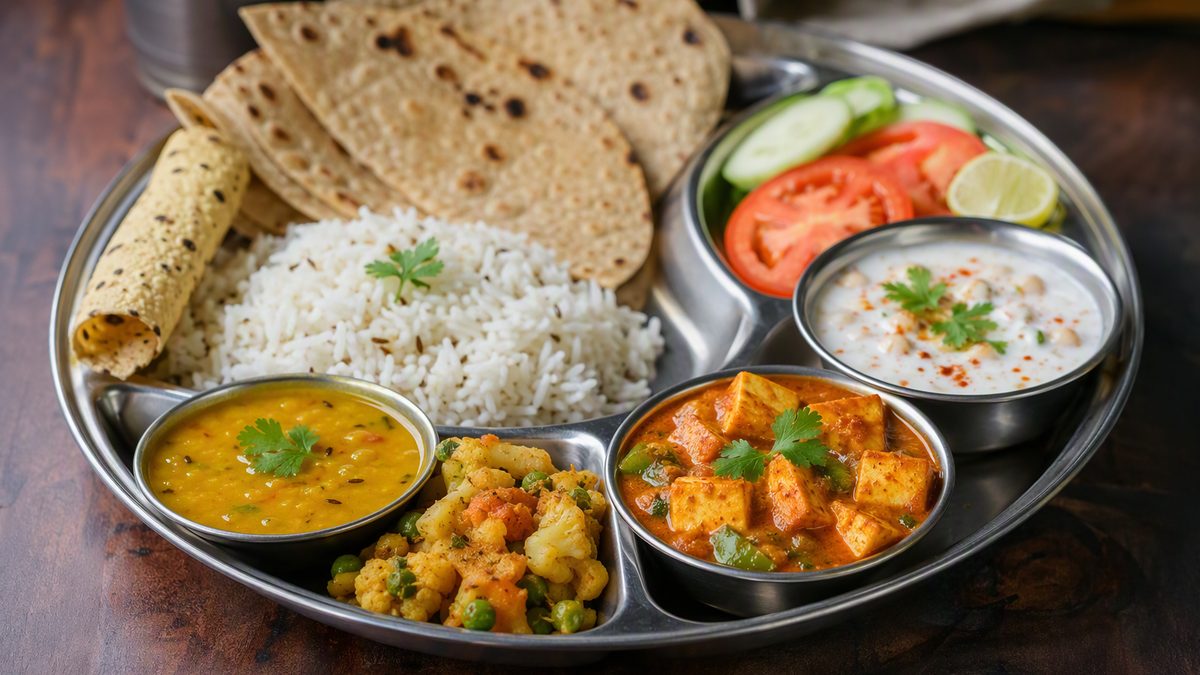
"Vegetarians can't get enough protein" is one of the most repeated myths in Indian gyms. You can, but not by eating the way most Indian households eat by default, which is roti- and rice-heavy with a thin bowl of dal. This page is the plan: how much protein to aim for, a simple way to build every meal, and two full 100 g protein vegetarian days you can copy, with the grams for each meal. If you want the full list of foods and their numbers instead, see our 30 protein rich veg foods.
How Much Protein Do You Need?
The ICMR-NIN recommendation for healthy Indian adults is about 0.83 g of protein per kg of body weight a day. That covers basic needs, not muscle building. For people lifting weights, research reviews point to around 1.6 g per kg per day as the level beyond which extra protein adds little muscle for most people. A practical range:
| Goal | Protein per kg body weight | Example: 70 kg person |
|---|---|---|
| Sedentary adult | ~0.8 g | ~56 g |
| Regular exercise, general fitness | 1.0–1.2 g | 70–85 g |
| Strength training, muscle gain or fat loss | 1.4–1.8 g | 100–125 g |
Get a personal number from the protein calculator, or read how much protein Indians need to build muscle. Whatever the number, the simplest way to hit it is 20–35 g at each of three or four meals, not one huge dinner.
The High-Protein Veg Meal Formula
Every main meal in the plans below follows the same four-part plate. Once you know it, you can swap foods freely and still land near your target.
- One dense protein (15–25 g): 100 g paneer, 50 g dry soya chunks, 100 g tofu, a katori of hung curd, or 2 besan chillas.
- One supporting protein (5–8 g): a katori of dal, rajma, chana or curd, or a glass of milk.
- Carbs to suit your goal: 2–3 rotis or a katori of rice, more when bulking, fewer when cutting.
- Vegetables for volume: sabzi or salad. They add fibre and micronutrients, not much protein.
Snacks follow a smaller version: one protein-first item (roasted chana, peanuts, sattu, milk, hung curd) instead of biscuits or namkeen.
Sample Day 1: 100 g Protein Vegetarian Day (Paneer and Dairy)
This day uses ordinary Indian food, with no protein powder, and lands at roughly 105 g of protein. Values are estimates from IFCT 2017 and USDA data; your numbers depend on portion sizes, brands and how much oil you use.
| Meal | What to eat | Protein (approx.) | kcal (approx.) |
|---|---|---|---|
| Breakfast | 2 besan chillas (50 g besan) stuffed with 50 g paneer | ~20 g | ~390 |
| Mid-morning | 1 glass toned milk (250 ml) + 20 g almonds | ~12 g | ~265 |
| Lunch | 1 katori rajma + 1 katori cooked rice + 1 katori curd | ~18 g | ~500 |
| Evening | Soya chunk chaat (30 g dry) + 30 g roasted chana | ~22 g | ~220 |
| Dinner | 100 g paneer bhurji + 1 katori moong dal + 2 rotis | ~33 g | ~645 |
| Total | ~105 g | ~2,000 |
Calories assume about a teaspoon of oil or ghee in each cooked dish. This day suits a 65–75 kg person who trains and wants to maintain weight or gain slowly.
Sample Day 2: Budget High-Protein Veg Day (No Paneer, No Powder)
For hostel, PG or tight-budget weeks. It leans on soya, dal, chana, peanuts and milk, the cheapest vegetarian protein per gram in India.
| Meal | What to eat | Protein (approx.) | kcal (approx.) |
|---|---|---|---|
| Breakfast | Sattu shake: 40 g sattu blended in 250 ml toned milk + 1 banana | ~16 g | ~400 |
| Lunch | Thick moong dal (50 g dry dal) + 2 rotis + 1 katori curd | ~23 g | ~520 |
| Evening | 30 g peanuts + 1 katori boiled kala chana chaat | ~16 g | ~330 |
| Dinner | Soya chunk curry (50 g dry) + 2 rotis + 1 katori curd | ~37 g | ~520 |
| Bedtime | 1 glass toned milk (250 ml) | ~8 g | ~150 |
| Total | ~100 g | ~1,900 |
The trick is the dal: 50 g of dry dal per person makes a thick bowl with about 12 g of protein, against 6–8 g for the usual watery katori. More on that in protein in dal. If soya is new to you, start at 25 g dry and build up over a week or two to avoid bloating; our soya chunks guide covers how much is sensible.
Adjusting the Plan for Fat Loss or Muscle Gain
Keep protein the same and move calories with carbs and fat. Set your calorie target with the calorie calculator first.
| Goal | Changes to Day 1 or Day 2 | Result (approx.) |
|---|---|---|
| Fat loss | Low-fat paneer instead of full-fat, double-toned milk, skip the almonds or peanuts, one roti less at dinner | ~1,600 kcal, ~100 g protein |
| Maintenance | Eat the days as written | ~1,900–2,000 kcal, ~100–105 g protein |
| Muscle gain | Add 1 roti or ½ katori rice at lunch and dinner, a banana with peanut butter as a snack, full-cream milk | ~2,400–2,500 kcal, ~110–115 g protein |
Need more than 100 g, or short on time? One scoop of whey or a plant protein adds 22–25 g and is the easiest top-up. For full gym-day plans, see the Indian gym diet plan and the lean bulk diet plan. To get a week of meals built around your own targets, try the meal plan generator.
Key Vegetarian Protein Sources (Summary)
These ten foods do most of the work in the plans above. For the full list of 30 foods, including grains, seeds and vegetables, with protein per 100 g, per serving and per calorie, see protein rich food veg.
| Food | Serving | Protein per serving |
|---|---|---|
| Soya chunks | 50 g dry (1 katori cooked) | ~26 g |
| Low-fat paneer | 100 g | ~20–25 g |
| Paneer, full-fat | 100 g | ~19 g |
| Firm tofu | 100 g | ~17 g |
| Hung curd / Greek yogurt | 1 katori (150 g) | ~10–15 g |
| Besan | 50 g (2 chillas) | ~11 g |
| Rajma or chana, boiled | 100 g | ~8.5–9 g |
| Milk (toned) | 1 glass (250 ml) | ~8 g |
| Peanuts | 30 g handful | ~7.7 g |
| Moong or masoor dal | 1 katori (30 g dry) | ~7 g |
Is Vegetarian Protein "Incomplete"?
Dairy (paneer, curd, milk) and soya provide all essential amino acids in good amounts. Dals are lower in methionine and cereals like wheat and rice are lower in lysine, but eaten together they cover each other. That is why dal-chawal, rajma-chawal and dal-roti work so well. You do not need to combine them in the same bite; eating a mix across the day is enough. The real problem in most Indian vegetarian diets is not quality but quantity.
Practical Tips for a High-Protein Vegetarian Diet
- Make dal thicker and bigger. Use 40–50 g dry dal per person instead of 25–30 g, or add a spoon of soya granules while cooking.
- Add a dairy source to every meal. A katori of curd, a glass of milk or paneer in the sabzi each adds 5–19 g.
- Use besan and sattu. Besan chilla for breakfast and a sattu drink in the evening are cheap, quick and traditional.
- Keep snacks protein-first. Roasted chana, peanuts and Greek yogurt beat biscuits and namkeen.
- Prep twice a week. Boil chana and rajma, soak soya, hang curd and make a big pot of thick dal. Our high-protein Indian meal prep guide shows how.
- Use protein powder as a top-up, not a base. If food gets you to 80 g, one scoop closes the gap. See our picks for plant protein powder in India if you avoid dairy.
Is Soya Safe to Eat Every Day?
For most people, yes, in normal food amounts such as 25–50 g of dry soya chunks a day. Research on typical dietary intakes has not shown meaningful effects on men's testosterone. Soya chunks are high in fibre, so introduce them gradually if they cause bloating. If you have a thyroid condition or another medical issue, talk to your doctor or dietitian about how much soya suits you.
Frequently Asked Questions
How can a vegetarian get 100 g of protein a day?
Eat 20 to 35 g at every meal. For example: besan chilla with paneer for breakfast, rajma with curd at lunch, soya chunk chaat as a snack and paneer bhurji with dal at dinner, plus milk or nuts in between. That adds up to about 105 g.
How much protein do I need on a vegetarian diet?
About 0.8 g per kg of body weight covers basic needs. If you lift weights or are losing fat, aim for 1.4 to 1.8 g per kg, which is 100 to 125 g a day for a 70 kg person.
Is a high protein vegetarian diet good for weight loss?
Yes. Protein keeps you full and helps you keep muscle while you are in a calorie deficit. Choose low-fat paneer, double-toned milk, hung curd, tofu and soya, and keep oil, ghee and nuts in check.
Can I build muscle on a vegetarian diet?
Yes. If you train hard, eat enough calories and reach about 1.6 g of protein per kg from a mix of dairy, soya, dal and grains, a vegetarian diet supports muscle gain well.
Do vegetarians need protein powder?
No, but it helps. Most vegetarians can reach 80 to 100 g from food with planning. A scoop of whey or plant protein is a convenient way to close the gap on busy days.
Is it safe to eat soya chunks every day?
For most people, yes, at around 25 to 50 g dry a day. Start small if soya causes bloating. If you have a thyroid condition, talk to your doctor or dietitian first.
Set your targets with the free calorie and macro calculator, then build a day of meals with the meal plan generator.
Track Your Vegetarian Protein
Photograph your thali and UltraFit360's AI logs the dal, paneer and roti macros for you.