💡 Quick Answer
An Indian keto diet keeps net carbs under about 20–50 g a day, which means no roti, rice, dal, potato or sugar, and builds meals from paneer, eggs, chicken, fish, tofu, non-starchy vegetables, nuts and fats like ghee and mustard oil. Our sample days give about 1,435 kcal, 71 g protein and 27 g net carbs (vegetarian) and 1,355 kcal, 100 g protein and 16 g net carbs (non-vegetarian).
- Keto helps weight loss mainly by cutting calories and appetite; it does not burn more fat than a regular diet at the same calories and protein.
- Expect "keto flu" in week 1–2: salt, fluids and magnesium help.
- Not for pregnancy, type 1 diabetes, kidney disease, or a history of eating disorders.
- On diabetes medicines (especially insulin, sulfonylureas or SGLT2 inhibitors), only start with your doctor.
Keto lives or dies on hidden carbs. Photo-log your meals and UltraFit360 shows carbs, protein and fat for Indian dishes so you can stay under your limit. Get UltraFit360 on the App Store or Google Play.
Medical note: talk to your doctor before starting keto if you take medicine for diabetes or blood pressure, have kidney, liver, gallbladder or pancreatic disease, high LDL cholesterol, or are pregnant or breastfeeding. Insulin and sulfonylureas (glimepiride, gliclazide) can cause low blood sugar on very low-carb diets, and SGLT2 inhibitors (dapagliflozin, empagliflozin) carry a risk of ketoacidosis. Doses often need changing before you cut carbs.
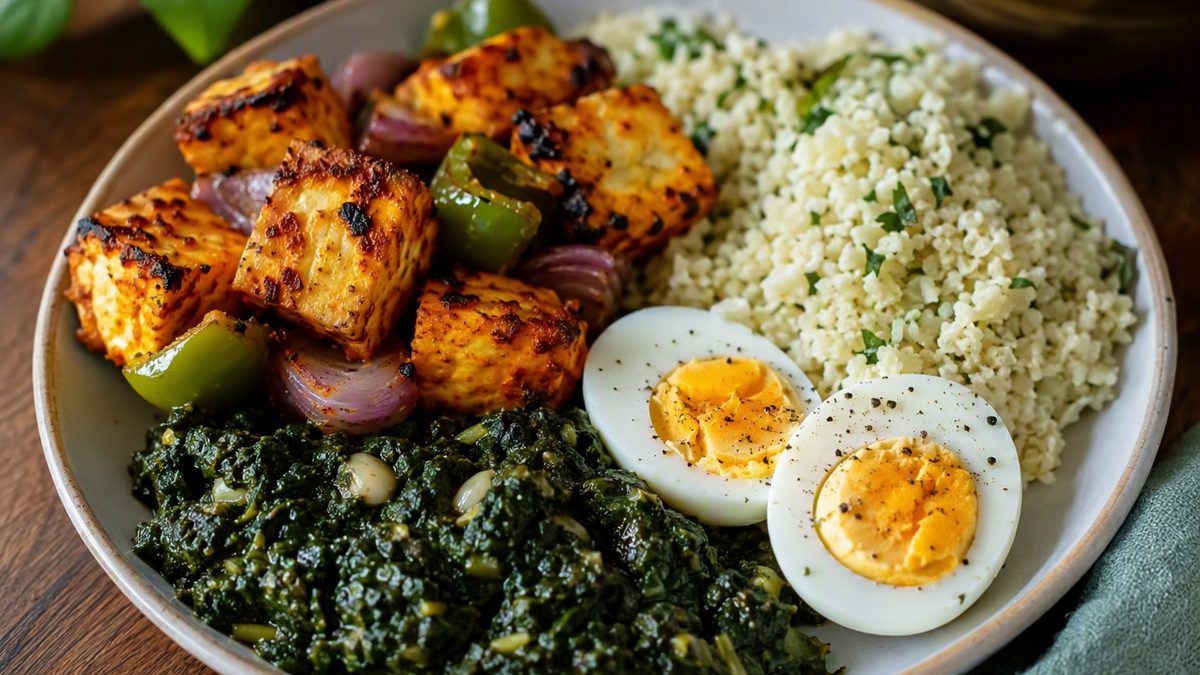
Keto is hard in India for one simple reason: our staples are carbs. Roti, rice, dal, poha, idli, potato and fruit are all off the menu or tightly limited. What is left still makes good food, though: paneer tikka, egg bhurji, tandoori chicken, fish curry, palak, bhindi, cauliflower, nuts and dahi in small amounts. This guide shows how to put that into a week you can actually follow, and when keto is not the right choice.
What Keto Is and What It Does
A ketogenic diet cuts carbs low enough, usually under about 20–50 g of net carbs a day, that your liver starts making ketones from fat as an alternative fuel. Fat provides roughly 60–75% of calories, protein 20–30%, and carbs 5–10%.
Keto works for weight loss for many people, mostly because high-protein, high-fat meals with no bread or sugar are filling and people eat less. Carefully controlled studies, including metabolic-ward experiments by Kevin Hall's group at the US National Institutes of Health, found that when calories and protein are matched, keto does not cause meaningfully more fat loss than a higher-carb diet. Year-long trials such as DIETFITS (JAMA, 2018) found similar weight loss on healthy low-carb and low-fat diets. So choose keto if it suits your appetite and food preferences, not because it is magic. If you prefer Indian staples, a high-protein plan like the 1500 calorie Indian diet chart works just as well.
Who Should Not Do Keto
- Pregnant or breastfeeding women.
- People with type 1 diabetes, or type 2 diabetes on insulin, sulfonylureas or SGLT2 inhibitors, unless a doctor supervises it.
- People with chronic kidney disease, liver disease, pancreatitis or gallbladder disease.
- Anyone with a current or past eating disorder.
- People with very high LDL cholesterol or familial hypercholesterolaemia: LDL rises noticeably on keto in some people, so get a lipid profile before and 2–3 months after starting.
- Teenagers and competitive athletes in high-intensity sports, whose performance usually suffers on very low carbs.
If you have type 2 diabetes, see our Indian diabetes diet plan for a moderate-carb approach most doctors are comfortable with.
Indian Keto Foods to Eat
| Food | Serving | Net carbs (approx.) | Protein |
|---|---|---|---|
| Paneer (full fat) | 100 g | ~1–4 g | ~19 g |
| Eggs | 2 large | ~1 g | ~12.6 g |
| Chicken breast (raw) | 150 g | 0 g | ~34 g |
| Rohu, surmai, pomfret, prawns | 150 g raw | 0 g | ~25–30 g |
| Firm tofu | 150 g | ~2–3 g | ~18–25 g |
| Palak, methi, lauki, bhindi, cauliflower, cabbage, capsicum, mushrooms | 1 katori cooked | ~3–6 g | ~2–3 g |
| Almonds, walnuts | 25 g | ~1–2.5 g | ~4–5 g |
| Pumpkin, flax and chia seeds | 1 tbsp | ~0–1 g | ~2–3 g |
| Full-fat curd | 100 g | ~4–5 g | ~3.5 g |
| Cheese, cream, butter, ghee | as cooking fat | ~0–1 g | low |
| Mustard, groundnut, coconut and olive oil | 1 tsp | 0 g | 0 g |
Protein values match our guides to paneer, eggs and chicken breast; carb values are from USDA FoodData Central and vary with recipe.
Foods to Avoid or Strictly Limit
| Food | Serving | Carbs (approx.) |
|---|---|---|
| Medium phulka | 1 | ~19 g |
| Cooked rice | 1 katori (150 g) | ~42 g |
| Cooked dal | 1 katori (from 30 g dry) | ~18 g |
| Rajma, chole, sprouts | 1 katori | ~20–30 g |
| Potato, sweet potato, corn, peas | 1 katori | ~20–30 g |
| Banana | 1 medium | ~27 g |
| Toned milk | 250 ml | ~12 g |
| Sugar, jaggery, honey | 1 tsp | ~4–5 g |
| Poha, upma, idli, dosa, bread, biscuits | 1 serving | ~20–45 g |
One roti and a katori of dal can use up your whole day's carbs. Milk in tea is the most common hidden source: three cups with 100 ml milk each is about 15 g. Use a splash of cream or have black coffee and green tea instead. Even jaggery counts as sugar; see jaggery vs sugar.
Vegetarian Indian Keto Diet: Sample Day
| Meal | Foods | Calories | Protein | Net carbs |
|---|---|---|---|---|
| Breakfast | Paneer bhurji (100 g paneer, 1 tsp ghee, onion, capsicum) | ~365 kcal | ~19 g | ~5 g |
| Lunch | Palak paneer (75 g paneer, 150 g palak, 2 tsp ghee, 1 tbsp cream) + cauliflower rice (150 g, 1 tsp ghee) | ~485 kcal | ~21 g | ~9 g |
| Snack | 25 g almonds + 200 ml salted chaas | ~185 kcal | ~7 g | ~6 g |
| Dinner | Tofu tikka (150 g firm tofu, 1 tbsp mustard oil) + sautéed bhindi or cabbage (100 g, 1 tsp oil) | ~400 kcal | ~24 g | ~7 g |
| Day total | ~1,435 kcal | ~71 g | ~27 g | |
Fat supplies roughly two-thirds of the calories here. Vegetarian keto leans heavily on dairy, so mix in tofu, nuts and seeds, and use mustard or groundnut oil for some cooking rather than only ghee and cream.
Non-Vegetarian Indian Keto Diet: Sample Day
| Meal | Foods | Calories | Protein | Net carbs |
|---|---|---|---|---|
| Breakfast | 3-egg masala omelette with spinach and 20 g cheese, in 1 tsp butter | ~340 kcal | ~24 g | ~2 g |
| Lunch | Chicken tikka (150 g raw breast, hung curd marinade, 1 tbsp oil) + cucumber-onion salad + mint chutney | ~365 kcal | ~37 g | ~5 g |
| Snack | 25 g walnuts + 30 g cheese cubes | ~275 kcal | ~11 g | ~2 g |
| Dinner | Fish curry in coconut milk (150 g raw rohu, 50 ml coconut milk, 1 tsp oil) + beans and cauliflower sautéed in 1 tsp ghee | ~375 kcal | ~28 g | ~7 g |
| Day total | ~1,355 kcal | ~100 g | ~16 g | |
Both days are set up for fat loss. If you need more calories, add fat in measured amounts: a teaspoon of ghee is about 45 kcal, 10 g of almonds about 58 kcal. Set your calorie target with the calorie calculator.
7-Day Indian Keto Menu
| Day | Vegetarian | Non-vegetarian |
|---|---|---|
| Mon | B: paneer bhurji · L: palak paneer + cauliflower rice · D: tofu tikka + bhindi | B: masala omelette · L: chicken tikka + salad · D: fish curry + beans |
| Tue | B: curd (100 g) + seeds + 5 walnuts · L: paneer tikka + mint chutney + salad · D: mushroom-capsicum stir-fry with tofu | B: egg bhurji · L: chicken curry (no potato) + cabbage sabzi · D: tandoori fish + salad |
| Wed | B: grated paneer and flaxseed cheela (no besan) · L: methi malai paneer + cauliflower rice · D: tofu bhurji + lauki sabzi | B: boiled eggs + cheese · L: chicken keema + cauliflower rice · D: prawn masala + sautéed greens |
| Thu | B: paneer cubes + almonds · L: kadai paneer (no potato) + salad · D: tofu curry in coconut milk + beans | B: omelette with mushrooms · L: fish tikka + raita · D: chicken shorba + sautéed vegetables |
| Fri | B: paneer bhurji · L: palak tofu + cauliflower rice · D: grilled paneer + mixed salad with olive oil | B: egg curry (3 eggs) · L: tandoori chicken + salad · D: fish curry + bhindi |
| Sat | B: curd with chia + walnuts · L: paneer tikka salad · D: mushroom and paneer curry (no peas) | B: egg bhurji with cheese · L: mutton curry (100 g) + cabbage · D: grilled fish + beans |
| Sun | B: paneer bhurji with spinach · L: shahi paneer (light cream) + cauliflower rice · D: tofu tikka + salad | B: masala omelette · L: butter chicken (home, small portion) + cauliflower rice · D: prawn stir-fry + greens |
Keto Flu and Electrolytes
In the first 1–2 weeks many people get a headache, tiredness, irritability, cramps or dizziness. This "keto flu" is largely from losing water and sodium as insulin falls and glycogen is used up. It usually passes, and most of it can be prevented:
- Sodium: salt your food normally and have salted chaas or a clear vegetable or chicken soup once or twice a day. If you have high blood pressure, heart failure or kidney disease, ask your doctor first.
- Potassium: palak, mushrooms, avocado, curd and nuts. Avoid potassium supplements unless prescribed.
- Magnesium: pumpkin seeds, almonds and leafy greens. Some people use a magnesium supplement; see magnesium for sleep and recovery.
- Fluids: 2.5–3 litres a day, more in Indian summers or if you train.
- Fibre: constipation is common; eat 3–4 katoris of low-carb vegetables and a tablespoon of chia or flax daily.
Common Indian Keto Mistakes
- Too much fat, not enough protein. Fat is for flavour and fullness, not a target to hit. Aim for 1.2–1.6 g protein per kg.
- Restaurant gravies. Many contain cashew paste, sugar or potato; tandoori and tikka dishes are safer.
- Keto snacks and bars. Many "keto" products are calorie-dense and still contain sugar alcohols or starch.
- Calories creep. Paneer, cheese, nuts and ghee are 300–900 kcal per 100 g. Keto still needs a calorie deficit to lose fat.
- No exit plan. When you stop keto, bring carbs back gradually (a roti or a katori of dal at a time) and keep protein high, or the weight comes back quickly.
Keto vs Other Indian Diets for Weight Loss
If you miss roti and dal or find keto impossible with family meals, a calorie-controlled Indian diet with high protein works just as well over a year. Options include the 1200, 1500 and 1800 calorie Indian diet charts, intermittent fasting with an Indian diet, and our insulin resistance diet plan. Pick the one you can follow for months, not weeks.
Frequently Asked Questions
Can vegetarians do keto in India?
Yes, but it relies heavily on paneer, cheese, curd, tofu, nuts and seeds, because dal, chana, rajma and grains are too high in carbs. A vegetarian keto day can give about 70 g protein at around 1,400 kcal.
Can I eat roti or dal on keto?
Not in normal portions. One medium phulka has about 19 g carbs and a katori of dal about 18 g, which together use up most of a 20–50 g daily limit.
How much weight can I lose on an Indian keto diet?
Many people lose 2–3 kg in the first two weeks, mostly water. After that, fat loss depends on your calorie deficit and is usually 0.5–1 kg a week, similar to other diets at the same calories.
Is keto safe for people with diabetes?
Some people with type 2 diabetes use low-carb or keto diets under medical supervision. Medicines like insulin, sulfonylureas and SGLT2 inhibitors can cause low blood sugar or ketoacidosis on keto, so doses must be reviewed by your doctor first. Keto is not for type 1 diabetes without specialist care.
What is keto flu and how do I avoid it?
Keto flu is headache, tiredness and cramps in the first 1–2 weeks of keto, largely from losing water and sodium. Salting food, drinking salted chaas or soup, 2.5–3 litres of fluid and magnesium-rich foods usually prevent it.
Which oil is best for Indian keto cooking?
Mustard, groundnut and olive oil are good everyday choices because they are mostly unsaturated fat. Use ghee, butter and coconut oil in smaller amounts, especially if your LDL cholesterol is high.
Set your targets with the free calorie and macro calculator, then build a day of meals with the meal plan generator.
Track Net Carbs on Indian Food
Snap a photo of your paneer tikka or egg curry and UltraFit360 estimates carbs, protein and calories, with a weekly AI check-in on your weight trend.