💡 Quick Answer
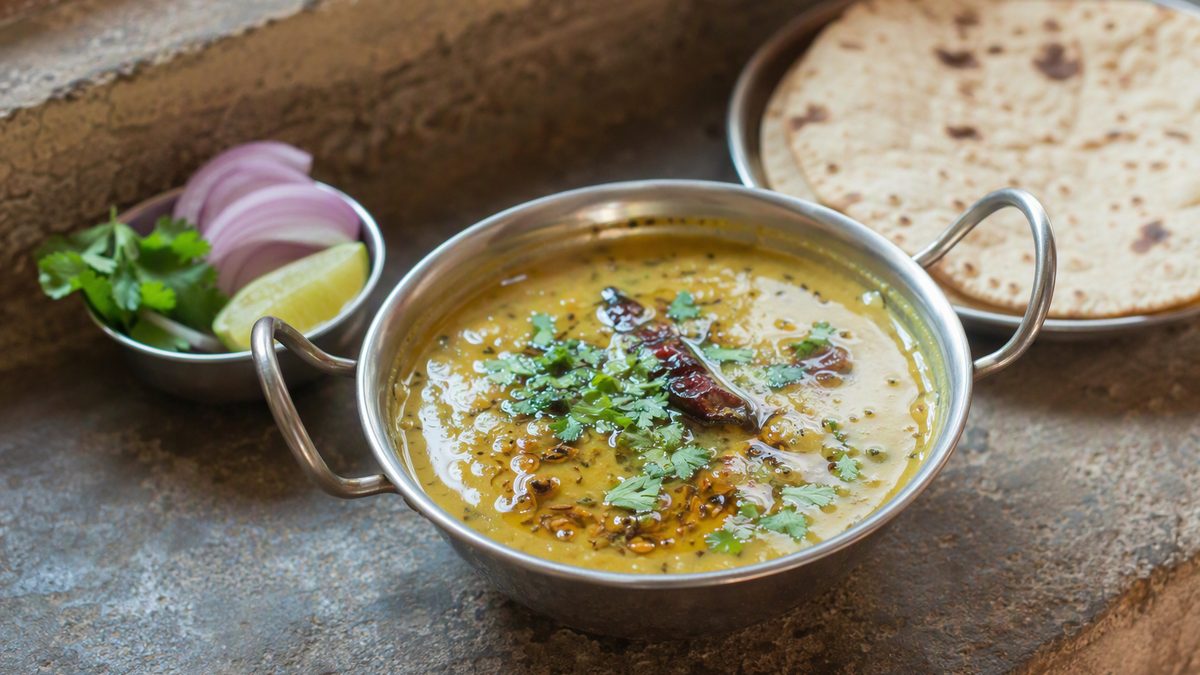
One 150 g katori of plain home dal, made from about 30 g of dry dal, has roughly 100–105 kcal, 6–7 g protein and 17 g carbs before tadka. A teaspoon of ghee in the tadka takes it to about 150 kcal, a home dal fry is around 175 kcal, and a restaurant dal tadka is usually 220–280 kcal per katori.
- The type of dal barely changes calories; the tadka and thickness do.
- Each teaspoon of ghee or oil adds about 45 kcal and no protein.
- A thick dal (45 g dry per katori) gives about 150 kcal and 10 g protein before tadka.
- Dal with rice or roti makes a complete protein across the meal.
Portion calculator
2 katori of plain dal, no tadka ≈ 13.6 g protein · 210 kcal
Scaled from the figures on this page. Brands and recipes vary.
Counting calories? Snap a photo of your dal-chawal or dal-roti and the UltraFit360 app logs the dal, tadka and all, against your daily target. Get UltraFit360 on the App Store or Google Play.
Dal is in almost every Indian lunch and dinner, and it is one of the easiest foods to log badly. The packet gives numbers for 100 g of dry dal, but a katori on your plate is mostly water, and the tadka on top can add more calories than the lentils. Here are realistic per-katori numbers for home and restaurant dal, with the recipe stated so you can adjust for your kitchen.
Calories in Dal Per Katori: Toor, Moong, Masoor, Chana and Urad
Values per 100 g of dry dal are from the Indian Food Composition Tables (IFCT 2017, ICMR-NIN). The katori columns assume a medium-thick home dal with about 30 g of dry dal per 150 g cooked katori and no tadka. They match the figures in our protein in dal guide.
| Dal | Per 100 g dry | 1 katori, plain (150 g) | Protein | Carbs | Fat |
|---|---|---|---|---|---|
| Toor / arhar dal | ~335–345 kcal, 21.7 g protein | ~100–105 kcal | ~6.5 g | ~18 g | ~0.5 g |
| Moong dal (yellow, split) | ~330–350 kcal, ~24 g protein | ~100–105 kcal | ~7.3 g | ~17 g | ~0.4 g |
| Masoor dal (red lentil) | ~330–345 kcal, ~24–25 g protein | ~100–105 kcal | ~7.3 g | ~17 g | ~0.3 g |
| Chana dal | ~340–360 kcal, ~20–21.5 g protein | ~105–110 kcal | ~6.3 g | ~17 g | ~1.6 g |
| Urad dal (dhuli) | ~330–345 kcal, ~23–26 g protein | ~100–105 kcal | ~7.2 g | ~17 g | ~0.5 g |
| Thick dal (45 g dry per katori) | — | ~150–155 kcal | ~10–11 g | ~26 g | ~0.7 g |
Basis: IFCT 2017 (ICMR-NIN) values for raw split pulses, scaled to the dry weight in each katori. Turmeric, salt and water add almost nothing. If you make thinner dal (20 g dry per katori), take about a third off; if you make it thicker, scale up.
The takeaway: the type of dal hardly matters for calories. A katori of moong and a katori of toor dal made the same way are within 5 kcal of each other. What changes the number is how much dry dal goes into each katori and what happens in the tadka pan.
Dal Tadka, Dal Fry and Restaurant Dal
Ghee and oil are about 45 kcal per teaspoon (5 g, USDA FoodData Central). That one teaspoon is nearly half the calories of a plain katori of dal, and it adds no protein. Here is how common versions compare, each for a 150 g katori:
| Dal (1 katori, 150 g) | What's in it | Calories | Protein | Fat |
|---|---|---|---|---|
| Plain dal, no tadka | 30 g dry dal, water, turmeric, salt | ~100–105 kcal | ~6.5–7.3 g | ~0.5 g |
| Dal with a light tadka | As above + ½ tsp ghee or oil | ~125 kcal | ~7 g | ~3 g |
| Home dal tadka | As above + 1 tsp ghee, jeera, garlic, chilli | ~150 kcal | ~7 g | ~5.5 g |
| Home dal fry | 30 g dry dal + onion-tomato masala + 1½ tsp oil | ~170–180 kcal | ~7.3 g | ~8 g |
| Restaurant / dhaba dal tadka or dal fry | Larger ghee or butter tadka, often a second tadka on top | ~220–280 kcal | ~7–8 g | ~14–20 g |
| Restaurant dal makhani | Whole urad and rajma with butter and cream | ~250–350 kcal | ~8–9 g | ~15–25 g |
Basis: plain dal from IFCT 2017 as above; ghee and oil from USDA FoodData Central (about 44–45 kcal per 5 g teaspoon); onion and tomato counted at about 20 kcal per katori. Restaurant figures are estimates: kitchens vary widely in how much fat they use.
So a restaurant dal tadka can be more than twice the calories of the same dal at home, with no extra protein. That matters if you eat out several times a week, or if your office canteen dal arrives with a visible layer of oil on top.
Dal with rice or roti: full plate numbers
| Plate | Calories | Protein |
|---|---|---|
| 1 katori dal tadka + 1 katori cooked white rice (150 g) | ~345 kcal | ~11 g |
| 1 katori dal tadka + 2 medium chapatis, no ghee | ~345 kcal | ~13 g |
| 2 katori dal tadka + 1 katori rice + salad | ~510 kcal | ~18 g |
| 1 katori dal tadka + 1 katori rice + 1 katori curd (150 g) | ~435 kcal | ~16 g |
Rice at 195 kcal and 4 g protein per katori and chapati at about 97 kcal and 3.2 g protein each, from our calories in rice and calories in chapati guides. Curd at about 60 kcal and 3.5 g protein per 100 g.
Why Dal Calories Vary So Much
- Thickness. The biggest variable. A runny South Indian-style dal might use 20 g of dry dal per katori; a thick Punjabi-style dal can use 45 g or more. That is the difference between about 70 and 150 kcal before any fat.
- The tadka. One teaspoon of ghee per katori adds about 45 kcal. Many home cooks use a tablespoon (three teaspoons) for a pot that serves three or four, which works out to roughly 1 teaspoon per katori. Restaurants often use two or three times that.
- Add-ins. Vegetables such as lauki, spinach or tomato add fibre and only a few calories. Coconut (in some South Indian dals), cream and butter add a lot.
- Serving size. A "bowl" in many homes is 200–250 g, not 150 g. Weigh your usual bowl once so you know what your katori really holds.
Is Dal Good for Weight Loss?
Yes. Plain dal is one of the best foods on an Indian fat-loss plate: about 100 kcal per katori, 6–7 g protein, very little fat and plenty of fibre that keeps you full. The things that make dal less diet-friendly are all additions you control.
- Put the tadka in the pot, not the bowl. One teaspoon of ghee per serving in the pot keeps the flavour. Adding an extra spoon on top of each bowl adds 45 kcal every time.
- Make it thicker, not oilier. Using 45 g of dry dal per serving raises protein to about 10 g for 150 kcal, which is a better trade than adding a second tadka.
- Bulk it with vegetables. Palak dal, lauki dal or dal with tomato and drumstick fills the bowl for very few calories.
- Swap the ratio on your plate. Two katoris of dal with one katori of rice gives more protein and fullness than one katori of dal with two of rice, for similar calories.
If you are tracking protein, remember that dal is a good base but not a big protein source on its own. Six to seven grams per katori adds up slowly when your target is 80–120 g a day.
How It Fits Your Goal
Fat loss: one katori of home dal tadka, one katori of rice, a katori of dry sabzi and a katori of curd is roughly 500–520 kcal with about 18 g protein. Swap the rice for a second katori of dal and the plate goes to about 470 kcal with 21 g protein. Keep the tadka to a teaspoon per serving and skip the ghee on rice. For a full day built around dal, see our vegetarian fat-loss diet plan.
Muscle gain: dal is a cheap, filling carb-and-protein base. Make it thick, use 50–60 g dry dal per serving, and stir in soya granules or paneer cubes to push one bowl to 15–20 g protein; our soya chunks protein and calories in paneer guides have the numbers. Pair it with the plans in our Indian gym diet plan.
Comparing with other staples: rajma and chole are denser and higher in calories per katori; see calories in rajma and calories in chole. For 45+ Indian foods in one table, use the Indian food calories and protein chart, and set your daily numbers with the calorie calculator and protein calculator.
Sources: IFCT 2017 (ICMR-NIN) for raw pulses; USDA FoodData Central for ghee, oil, cooked rice and curd. Katori values are calculated from the stated dry weights and recipes, so treat them as estimates.
Frequently Asked Questions
How many calories are in 1 katori of dal?
A 150 g katori of plain home dal made from about 30 g of dry dal has roughly 100 to 105 kcal and 6 to 7 g protein. With a tadka of 1 teaspoon of ghee it is about 150 kcal, and a restaurant dal tadka is usually 220 to 280 kcal.
Which dal has the lowest calories?
The differences are tiny. Moong, masoor, toor and urad dal all cook to about 100 to 105 kcal per plain katori, and chana dal is slightly higher at 105 to 110 kcal. How thick you make it and how much ghee or oil goes into the tadka matter far more.
How many calories are in dal tadka?
A home dal tadka with 1 teaspoon of ghee per katori is about 150 kcal. Restaurant and dhaba dal tadka, made with more ghee or butter, is usually 220 to 280 kcal per katori for the same 6 to 8 g of protein.
How many calories are in dal fry?
A home dal fry with an onion-tomato masala and about 1.5 teaspoons of oil per katori is around 170 to 180 kcal with 7 g protein. Restaurant dal fry is often 220 to 280 kcal.
Is dal good for weight loss?
Yes. Plain dal is low in fat, high in fibre and gives 6 to 7 g protein for about 100 kcal per katori. Keep the tadka to about 1 teaspoon of ghee per pot rather than per bowl, and make it thicker if you want more protein.
How much protein is in 1 katori dal?
About 6 to 8 g in a typical 150 g katori made from 30 g of dry dal. A thick dal made from 45 g of dry dal per katori gives about 10 g.
Is moong dal or toor dal better for weight loss?
Both work. Moong dal has slightly more protein (about 7.3 g vs 6.5 g per katori) for the same calories and is easier to digest, so it is a good default. Choose the one you will eat regularly.
Log Indian meals in seconds: snap a photo of your thali and UltraFit360 estimates calories and protein. Set your targets with the free calorie and macro calculator.
Log Your Dal-Roti in One Photo
UltraFit360 estimates calories and protein for dal, rice, roti and sabzi from a single photo and tracks them against your goal.