💡 Quick Answer
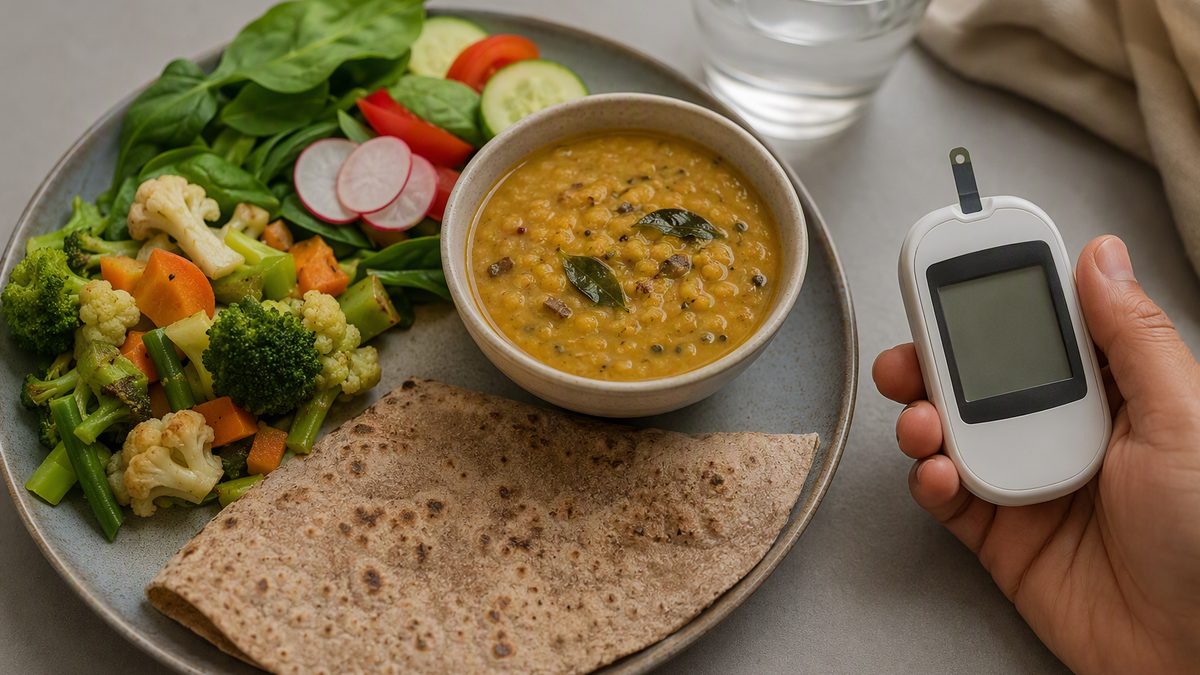
A good Indian diabetes diet keeps familiar food but changes the plate: half non-starchy vegetables, a quarter protein (dal, paneer, eggs, chicken, fish), a quarter whole grains (1–2 phulkas or ½–1 katori rice), and no sugary drinks. Our sample day gives about 1,495 kcal, 80 g protein and 178 g carbohydrate (about 48% of calories), split evenly across meals so no single meal spikes blood sugar.
- Portion and spread carbs across the day; don't skip meals, especially on medicines.
- Eat vegetables and protein first and the roti or rice last.
- Walk 10–15 minutes after main meals.
- Losing 5–10% of body weight often improves blood sugar substantially in type 2 diabetes.
Seeing what is on your plate is the first step. Snap a photo of your meal and UltraFit360 estimates carbs, protein and calories for Indian dishes. Get UltraFit360 on the App Store or Google Play.
Medical note: this is general guidance for adults with type 2 diabetes or prediabetes, not a personal prescription. Talk to your doctor or a registered dietitian before changing your diet, especially if you take insulin or sulfonylureas (glimepiride, gliclazide, glibenclamide), which can cause low blood sugar if you eat fewer carbs or skip meals, or SGLT2 inhibitors, which should not be combined with very low-carb diets without supervision. Type 1 diabetes, pregnancy, and kidney disease need individual plans.
India has one of the largest numbers of adults with diabetes in the world, and the typical diet is part of the reason. Large Indian surveys from the ICMR-INDIAB study show most Indian diets get well over 60% of calories from carbohydrate, much of it white rice and refined wheat, with relatively little protein. You do not need to give up roti, rice or dal to manage diabetes. You need to change how much of them you eat, what you eat them with, and how you spread them through the day.
Diabetes Diet Basics
- There is no single "diabetes diet". The American Diabetes Association (ADA) Standards of Care say there is no ideal percentage of calories from carbs, protein and fat for everyone. The plan should fit your food, your medicines and your weight goals.
- Carb quantity matters most, then quality. A katori of brown rice raises blood sugar much like a katori of white rice; portion matters more than the variety.
- Protein and fibre slow the rise. Dal, curd, paneer, eggs, fish and vegetables with every meal blunt the spike from grains.
- Weight loss helps. In type 2 diabetes, losing 5–10% of body weight often lowers HbA1c, and larger losses can bring some people into remission.
- Cut free sugars. The ICMR-NIN Dietary Guidelines for Indians (2024) recommend keeping added sugar low and favouring whole grains, pulses, vegetables and fruit over refined, processed foods.
The Indian Diabetes Plate
The ADA plate method translates well to Indian food. Use a 9-inch (about 23 cm) plate:
| Part of plate | What goes there | Indian examples |
|---|---|---|
| ½ plate | Non-starchy vegetables | Palak, methi, lauki, tinda, bhindi, beans, cabbage, cauliflower, capsicum, cucumber-tomato salad |
| ¼ plate | Protein | Dal (a full katori), paneer, tofu, curd, eggs, chicken, fish, soya |
| ¼ plate | Carb food | 1–2 phulkas, or ½–1 katori rice, or 2–3 idlis |
| On the side | Water, chaas or unsweetened tea | No juice, cold drinks or sweet lassi |
Potato, sweet potato, corn and peas count as carbs, not as the vegetable half. Dal and rajma give both protein and carbs: about 18 g carbs and 7 g protein per katori, so count a katori of dal toward both.
Indian Diabetes Diet Chart: Sample Day (~1,500 kcal)
This chart suits many adults with type 2 diabetes who also want to lose weight. Calories and protein are estimates from IFCT 2017 and USDA values used across our blog; carbohydrate is total carbs.
| Time | Meal | Calories | Protein | Carbs |
|---|---|---|---|---|
| 6:30 am | Tea with toned milk, no sugar + 5 soaked almonds | ~65 kcal | ~2 g | ~2 g |
| 8:30 am | 2 besan chillas with grated vegetables (½ tsp oil each) + 100 g curd | ~345 kcal | ~18 g | ~40 g |
| 11 am | 1 guava (or apple, orange, pear) | ~60 kcal | ~1 g | ~12 g |
| 1:30 pm | 2 multigrain phulkas + 1 katori dal + 1 katori sabzi (1 tsp oil) + salad | ~440 kcal | ~16 g | ~69 g |
| 4:30 pm | 30 g roasted chana + green tea | ~110 kcal | ~6 g | ~17 g |
| 8 pm | Chicken curry (120 g raw breast, 1 tsp oil) + 1 phulka + sautéed vegetables Veg: 75 g paneer bhurji or 150 g tofu | ~385 kcal | ~32 g | ~31 g |
| 10 pm (optional) | 150 ml toned milk, no sugar | ~85 kcal | ~5 g | ~7 g |
| Day total | ~1,495 kcal | ~80 g | ~178 g | |
Protein is about 21% of calories and carbs about 48%, a shift toward more protein and fewer carbs than a typical Indian day. Need a lower-carb version? Replace one lunch phulka with an extra katori of sabzi and 50 g paneer (about −19 g carbs). Need more calories (larger or active men)? Use the portions from the 1800 calorie Indian diet chart and apply the same plate and timing rules.
Low-GI Swaps for Common Indian Foods
| Instead of | Try | Why |
|---|---|---|
| A large mound of white rice | ½–1 katori rice with a full katori of dal, sabzi and curd; or parboiled or brown rice | Smaller portion plus protein and fibre lowers the rise |
| Maida naan, white bread, biscuits | Whole-wheat phulka, or atta mixed with besan | More fibre and protein per roti |
| Plain poha or upma | Poha or upma with vegetables and soya granules or peanuts, plus curd | Adds protein and fibre to a fast-digesting carb |
| Aloo paratha | Paneer, methi or mixed-dal paratha with little ghee | Less starch, more protein |
| Instant oats with sugar | Rolled or steel-cut oats cooked in milk with nuts | Slower digestion, no added sugar |
| Fruit juice, coconut water in large amounts | Whole fruit, 1–2 portions a day | Fibre slows sugar absorption |
| Mithai, "sugar-free" sweets | A small portion of fruit or curd with cinnamon | Sugar-free sweets still have maida, ghee and calories |
Millets (jowar, bajra, ragi) add fibre and minerals, but as finely ground flour they can still raise blood sugar quite a lot. Treat a millet roti like a wheat roti for portions. Jaggery and honey are sugar too; see jaggery vs sugar. For breakfast ideas, see low-glycaemic Indian breakfasts.
7-Day Indian Diabetes Diet Menu
Keep the portions from the sample day and the same meal times. Rotate:
| Day | Breakfast | Lunch | Dinner | Non-veg swap |
|---|---|---|---|---|
| Mon | 2 besan chillas + curd | 2 phulkas, dal, sabzi, salad | Paneer bhurji + 1 phulka + vegetables | Dinner: chicken curry |
| Tue | 2 idlis + 1 katori sambar + 2 boiled eggs or 100 g hung curd | ¾ katori rice, rajma (30 g dry), salad, curd | Tofu tikka + sautéed vegetables + 1 phulka | Lunch: fish curry instead of rajma |
| Wed | Rolled oats (30 g) in milk + 10 g nuts | 2 phulkas, chana (30 g dry), lauki sabzi | Moong dal khichdi (1 katori, extra dal and veg) + curd + salad | Breakfast: 2-egg omelette + 1 phulka |
| Thu | 2 moong dal chillas + curd | 2 jowar rotis, dal, palak paneer (50 g) | Soya chunk curry + 1 phulka + salad | Dinner: grilled chicken |
| Fri | Vegetable poha (½ plate) with soya granules + curd | 2 phulkas, masoor dal, bhindi, salad | Paneer tikka + vegetable soup | Lunch: egg curry (2 eggs) |
| Sat | 1 pesarattu + chutney + curd | ¾ katori brown rice, sambar, poriyal, curd | Dal + 1 phulka + 50 g paneer sabzi | Dinner: fish tikka |
| Sun | Sprouts chaat + 1 glass milk, no sugar | Chole (30 g dry) + 1 phulka + salad + raita | Tofu bhurji + 1 phulka + vegetables | Lunch: chicken (120 g raw) + 1 phulka |
Check any food in the Indian food calories and protein chart, and portion sizes in calories in rice and calories in chapati.
Meal Order, Timing and Walking
- Eat in order: salad and sabzi first, then dal, paneer or chicken, then roti or rice. Small studies in type 2 diabetes have found lower after-meal glucose when carbs are eaten last.
- Keep regular meal times, especially on insulin or sulfonylureas. Skipping lunch and eating a big dinner causes both lows and highs.
- Walk after meals: 10–15 minutes after lunch and dinner lowers the post-meal rise. Aim for at least 150 minutes of activity a week plus 2–3 strength sessions, as the ADA recommends.
- Dinner by 8–8:30 pm and keep it lighter than lunch if fasting sugars are high.
Check Your Numbers
Food affects people differently, so your glucose meter is the best guide. For many non-pregnant adults, the ADA suggests targets of 80–130 mg/dL before meals, under 180 mg/dL 1–2 hours after starting a meal, and an HbA1c under 7%; your doctor may set different targets. Test before and 2 hours after a meal you are unsure about, such as biryani or dosa, and adjust the portion if it pushes you above target.
Low blood sugar (under 70 mg/dL): shakiness, sweating, confusion. If you take insulin or sulfonylureas, carry glucose tablets or sugar. Take 15 g of fast sugar (3 teaspoons sugar in water or 150 ml juice), recheck after 15 minutes, and tell your doctor if it happens often.
Festivals, Weddings and Eating Out
- Plan the sweet: choose one small piece you really want, eat it right after a protein-rich meal rather than on an empty stomach, and walk afterwards.
- At a buffet: fill half the plate with salad, tandoori items and sabzi first; take one roti or a small scoop of rice or biryani.
- South Indian restaurants: 2 idlis or 1 plain dosa with sambar and an omelette or curd is gentler than a large masala dosa with potato.
- Fasting days (vrat): sabudana and potato are almost pure starch; use paneer, curd, nuts and rajgira in small amounts, and ask your doctor about medicine doses before fasting.
Mistakes to Avoid
- Cutting carbs sharply without telling your doctor while on insulin or sulfonylureas.
- Swapping sugar for "diabetic" sweets, biscuits or atta cookies that are still mostly flour and fat.
- Fruit juice and smoothies instead of whole fruit.
- Low protein: roti-sabzi meals with a thin dal leave you hungry and spike glucose more.
- Big rice dinners followed by sitting or sleeping.
- Alcohol on an empty stomach, which can cause delayed lows on diabetes medicines.
For related reading, see intermittent fasting for prediabetes, the insulin resistance diet plan, and why very low-carb plans like the Indian keto diet need medical supervision with diabetes medicines.
Frequently Asked Questions
What is the best Indian diet chart for diabetes?
One that fills half your plate with non-starchy vegetables, a quarter with protein such as dal, paneer, eggs, chicken or fish, and a quarter with 1–2 phulkas or ½–1 katori rice, spread across 3 meals and 1–2 small snacks with no sugary drinks.
Can diabetics eat rice in India?
Yes, in measured portions. Have ½–1 katori of cooked rice with a full katori of dal, vegetables and curd, and eat it at lunch rather than late at night. Brown or parboiled rice adds fibre, but portion size matters more than the variety.
How many rotis can a diabetic eat?
Most adults with type 2 diabetes do well with 1–2 medium phulkas per meal, about 19 g carbs each. Your doctor or dietitian may adjust this based on your weight, activity and medicines.
Which fruits are good for diabetes?
Whole guava, apple, pear, orange, papaya and berries in portions of about 100–150 g, 1–2 times a day. Eat fruit whole rather than as juice, and pair it with nuts or curd.
Is jaggery or honey better than sugar for diabetics?
No. Jaggery and honey are mostly sugar and raise blood glucose much like table sugar. Keep all of them to small amounts.
Can prediabetes be reversed with diet?
Often, yes. Losing 5–7% of body weight, eating fewer refined carbs and more protein and fibre, and being active for 150 minutes a week lowers the risk of progressing to type 2 diabetes, and many people return to normal blood sugar.
Set your targets with the free calorie and macro calculator, then build a day of meals with the meal plan generator.
See the Carbs in Every Indian Meal
Photo-log your thali to see carbs, protein and calories, sync steps from Apple Health or Health Connect, and get a weekly AI summary.